

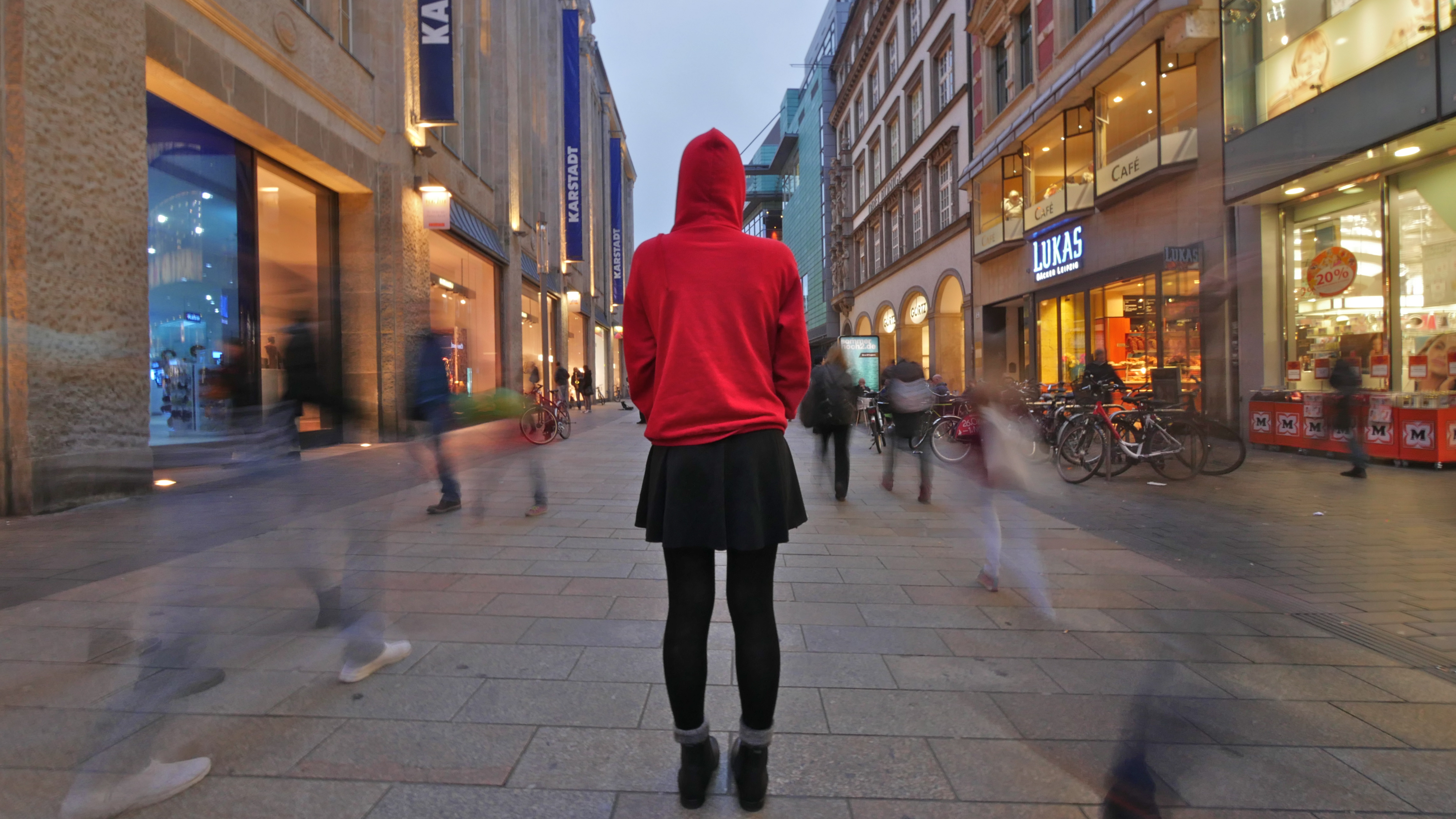
In a room full of people, a young woman raises her hand, wanting to join the ongoing discussion. But no one seems to notice her. Older people keep talking and talking, so after a while, the woman lowers her hand, discouraged.
This brief scene symbolizes a major conflict that takes center stage in the documentary “Auber 89”: the conflict between young and old.
The film addresses this topic by showing archival footage of urban renewal debates in the city of Aubervilliers that took place during the 1980s. People from a wide variety of countries live together in this Paris suburb in beige high-rise housing complexes and are interviewed about urgently needed proposals for the renovation of buildings and public spaces. This reveals clear differences between the needs of younger and older residents. The young people share a deep-seated frustration with the older generation’s disregard for their views and long for a dialogue on equal terms in which their political voice is respected.
Vanja and I, Sophia, were already well aware of these concerns and wishes, and we found it very exciting to see them in a new context, realized using material from the past.
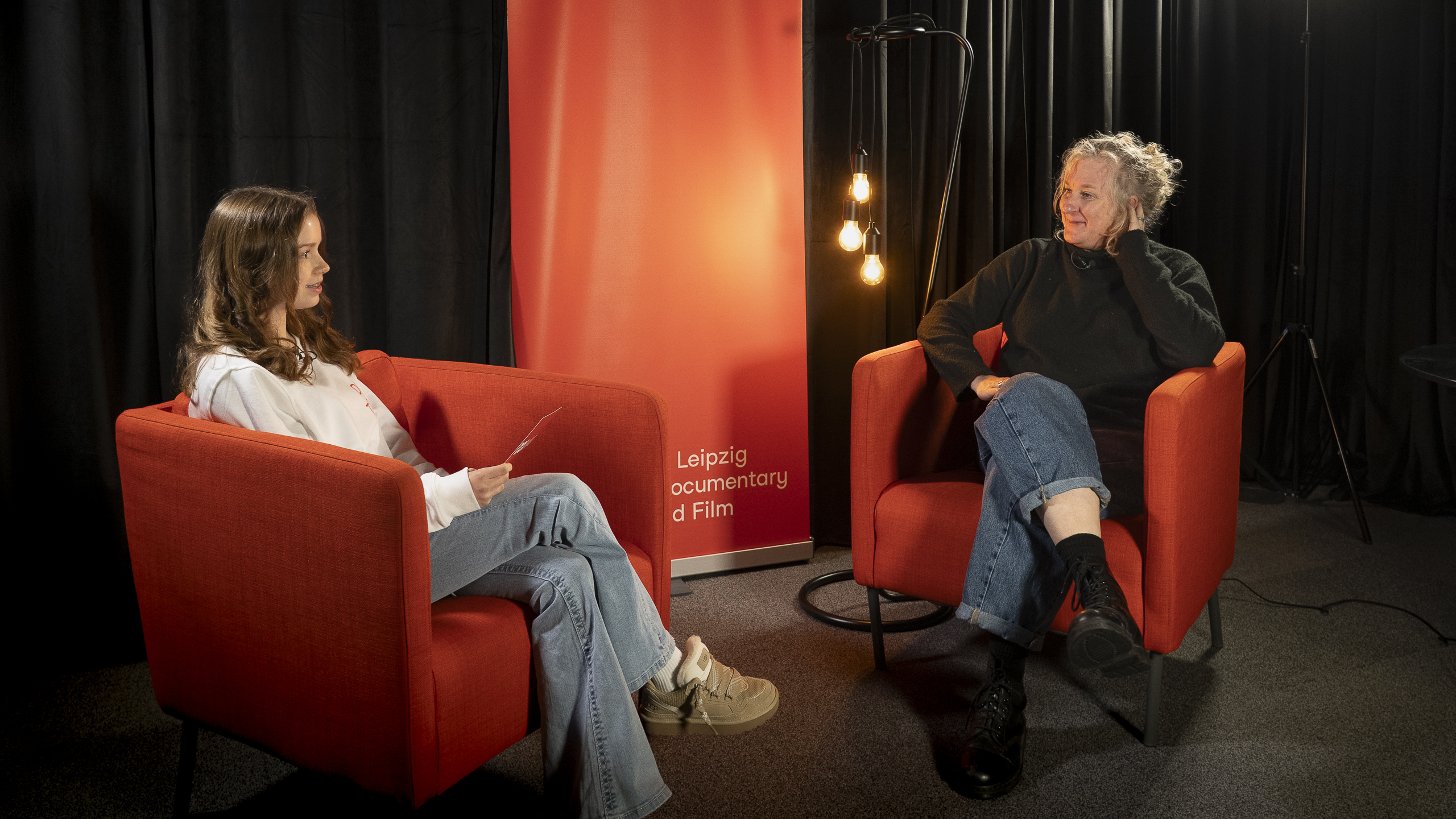
We met with Italian director Giuseppe Schillaci to interview him. Since Giuseppe Schillaci now lives in Paris, he speaks French fluently. That’s why we conducted the interview in French.
Here is the English version of the interview:
“A few days ago, we were in Bologna for a movie screening. At the same time, a demonstration by students and young people was taking place there. […] We had to interrupt the screening because tear gas even seeped into the theater.”
Vanja: The film depicts the situation in Aubervilliers in the 1980s. How do you think the situation has changed since then?
Giuseppe Schillaci: The film consists of archival footage from the 1980s in Aubervilliers, a suburb near Paris. I myself live very close by, less than a kilometer from this housing project in Aubervilliers. Today, parts of the project are being demolished and then restored or renovated. The difference from the renovations in the 1980s is that a great deal is being demolished as part of this new renovation. Furthermore, the housing complex will no longer be entirely public but will be half-privatized. This also means that living there will become more expensive. It’s very likely that the people who live there now will have to move away, farther from Paris—that is, move farther away from the city. This is a process we know very well and call gentrification. So today, one part of the housing project is almost deserted, while the other part is currently being renovated. The work is nearing completion. What has changed compared to what I filmed back then is that in the 1980s, there was still a certain energy and vitality to community life. The population was different back then, but there was also still a great deal of political activism. Today, I’d say people are a bit more downcast. They feel more let down by the government and public social policy. Still, there are people who are getting involved. There are still organizations and initiatives that try to do something for the city, the neighborhoods, the children, and the young people. So there’s definitely still a certain vibrancy, but it’s different from what it was in the 1980s.
Vanja: In your film, you portray angry young people. Do you think young people today are just as angry, or has that changed?
Giuseppe Schillaci: Yes, I think it’s exactly the same anger. In fact, I stand with the young people and support them. Imagine this: A few days ago, we were in Bologna for a movie screening. At the same time, there was a demonstration by students and young people taking place there. The demonstration was right on the street in front of the movie theater. We had to interrupt the screening because tear gas from the police even seeped into the theater. That’s why I believe the film is very timely. Because it’s also about a generational conflict: a conflict between young people trying to find their place and have a voice, and the older generations who hold the power and have a more established position. They’re trying to prevent young people from expressing themselves, having a voice, and participating in public life. I think there are truly very interesting and powerful parallels here. The film makes young people think and speak out. I hope it will increasingly reach a young audience as well. Because history repeats itself, but of course we can learn from it. Above all, we can learn that we are not alone—that perhaps 40 years ago, there were other young people who went through experiences similar to ours. These are very important demands. It’s about social life, political participation, involvement in public life, at universities and schools, and more government funding. I think this is a very important battle that we absolutely must take seriously.
“Politicians need to listen to this and give young people a voice so they can express themselves and try to bring about change.”
Vanja: How can we resolve the conflict between the generations?
Giuseppe Schillaci:I don’t know exactly how to solve it. Perhaps by listening to people and not just talking about rioters, not just about burning cars or smashed storefronts in the luxury districts of Milan or Paris. Instead, we really should be talking about the demands of young people. Because these demands are actually quite clear: more public funding for schools, more public funding for universities, more public funding for hospitals, less money for the military and for wars, and more money for social services to help people in difficult situations and to support neighborhoods and outlying areas. Of course, there are also those willing to resort to violence. But violence is only part of the picture—an extreme part that arises when there is a great deal of anger involved. This social anger, however, is justified, because behind it lie genuine demands and a real social conflict that must be heard. Politicians must listen to this and give young people a voice so they can express themselves and try to bring about change. Because the direction we’re heading in—more and more money for the private sector, more and more wars, and the increasing militarization of society—is not a good direction. And people know that very well.
“The personal and the political are always intertwined. People live in a community; we cannot live alone.”
Vanja:You used a lot of archival footage in your film. How did you choose the images for the film? I imagine you had a lot of material.
Giuseppe Schillaci: Yes, there was a great deal of raw footage that I found in the Aubervilliers city archives. At first, it was an enormous amount of work just to locate the archives, track down the videos and cassettes, and digitize them. Then I had to sort through the material and figure out what was shown in it and what was being discussed. I was particularly pleased that I found not only the finished films but also the raw footage—that is, the material that ultimately wasn’t included in the final films. In a sense, this contained everything that the communist city administration at the time might not have necessarily wanted to show its citizens. I was able to bring a hidden side to light. A side where the conflicts actually begin to emerge. This allowed me to understand the social dynamics even better. Little by little, through intensive study and a great deal of research, we worked together with the editor Christine Bouteiller—who did an incredible job—to try to bring out the various themes, problems, and conflicts. That’s how the film gradually took shape.
And then there was Fatah Bouyaman, the film’s protagonist. He had already been there in the 1980s and recognizes himself in the footage. He had lost his memories. So there’s a whole process in which he rediscovers his memories with the help of these tapes and this film, which was shot in the 1980s. That also gives the film great emotional power. Because he sees himself as a child again. He rediscovers his own private life, his friends, his neighbors. The personal and the political are always intertwined. People live in a community; we cannot live alone. The film attempts to explore precisely this direction and delve into this dimension: how people—men and women—and communities are connected to one another, put down roots in a place, and live there together. So it’s really about living together. And this coexistence can gradually break down and be destroyed if it isn’t nurtured. If we allow hatred to take up more space than love—to put it very simply.
When you work with archival material like this and really delve deep into it, you’re engaging with different levels. You try to uncover different layers of the earth—layers that contain relationships and images, but also places that you want to bring back to life and into the light. It’s almost magical. The past and memory can provide us with keys to understanding today’s world. They help us situate ourselves in space and time, gain perspective, and better comprehend the social dynamics of the present. If we live only in the present, only in the here and now, we lose sight of who we are and where we’re headed. But it’s also important to revive these memories and bring them back to life. And that is precisely what cinema can do—especially documentary film. Cinema is a way to enchant reality in a certain way and set it vibrating. To make it resonate with the past and, conversely, to make the past resonate once again in the present.
Vanja & Sophia
Titelbild: © DOK Leipzig 2026, Auber 89, Giuseppe Schillaci